
The real cost of cosmetic surgery is rarely the number on a price list. For a procedure performed solely to change your appearance, your health fund contributes almost nothing, so you pay the full amount yourself. If there’s a medical reason for the surgery, part of the cost may be covered, though that depends on your policy and the fine print.
This guide breaks down what goes into a surgical quote, provides indicative prices for the procedures we perform, and outlines the ways patients fund the balance.
Key Insights
- A cosmetic surgery quote is built from several separate fees (surgeon, anaesthetist, theatre and hospital, and often a surgical assistant), plus garments, medications and follow-up reviews.
- Indicative starting prices at our clinic range from $6,935 for labiaplasty to $35,737 for a circumferential lower-body lift, with most breast and body procedures priced between $9,000 and $24,000.
- Does private health cover cosmetic surgery? Only when the procedure carries an eligible Medicare item number. Purely cosmetic surgery attracts no fund benefit.
- Where cover does apply, your out-of-pocket cost depends on your level of cover, waiting periods, policy exclusions and any excess.
- Payment plans, savings, personal loans and early release of superannuation are the main ways patients cover the cost.
What Goes Into a Cosmetic Surgery Quote
A surgical quote is never a single number. It’s a stack of separate fees, and understanding each one helps you compare quotes properly and avoid surprise bills later.
The four core fees in most quotes are:
- Surgeon’s fee: covers the operation itself, along with Dr Yunaev’s time, skill and experience.
- Anaesthetist’s fee: billed separately by the anaesthetist, based on the length and complexity of your surgery.
- Theatre and hospital fees: the operating theatre, your bed, nursing care and recovery time.
- Surgical assistant’s fee: charged where a second pair of trained hands is needed in theatre.
On top of those, a realistic budget should account for costs that often fall outside the headline figure, including your initial consultation, pre- and post-operative reviews, compression garments, post-surgical medications, and any pathology or imaging ordered before or after your procedure. Implants add an additional cost when used. If you’re uninsured, the hospital and anaesthetist portions aren’t offset by any fund benefit.
A clear, itemised quote should spell all of this out before you book, so ask for it in writing. Getting every fee listed up front is the simplest way to protect yourself from a bill you didn’t see coming.
Indicative Cosmetic Surgery Prices in Sydney
Every patient’s anatomy, goals, and medical history are different, so a precise figure can only be determined after a consultation. The ranges below are starting prices for our most-requested procedures and give you a realistic sense of scale rather than a fixed quote.
Breast Surgery
| Procedure | Indicative price (from) |
|---|---|
| Breast augmentation (implants) | $9,000 |
| Hybrid augmentation (implants and fat transfer) | $11,000 |
| Augmentation with fat transfer only | $16,000 |
| Breast lift or reduction | $13,095 |
| Breast lift with implants | $19,500 |
| Breast implant removal (explant surgery) | $5,308 |
| Implant removal, replacement and lift | $24,000 |
| Breast reconstruction | Price confirmed at consultation |
Body Surgery
| Procedure | Indicative price (from) |
|---|---|
| Labiaplasty | $6,935 |
| Liposuction (Vaser, per hour under general anaesthetic) | $6,000 |
| Arm lift (brachioplasty) | $9,280 |
| Thigh lift (thighplasty) | $9,280 |
| Full tummy tuck (abdominoplasty) | $13,474 |
| Extended tummy tuck | $15,974 |
| Fleur de lys tummy tuck | $20,974 |
| Circumferential lower body lift | $35,737 |
Male Procedures
| Procedure | Indicative price (from) |
|---|---|
| Gynaecomastia (liposuction, with or without mastectomy) | $8,188 |
| Extended male breast reduction | $16,094 |
For a smaller commitment, non-surgical ONDA body-contouring packages start at $350.
Two things affect where you land inside these ranges. First, uninsured patients should budget an additional amount for hospital and anaesthetist fees, anywhere from around $3,000 for a straightforward male chest procedure to $16,000 for extensive body-lift surgery. Second, a handful of procedures may attract a Medicare rebate that lowers the surgeon’s fee when strict medical criteria are met. Whether that applies to your situation is set out in our guide to what Medicare covers; this article stays focused on what a quote totals and what you pay.
Does Private Health Cover Cosmetic Surgery?
Private hospital insurance only pays a benefit toward a procedure that Medicare also recognises. Services not listed on the Medicare Benefits Schedule (including elective cosmetic surgery) are only covered to a limited extent, or not at all.
So, is cosmetic surgery covered by health insurance? If the surgery is done purely to change your appearance, no, you pay the full cost yourself. If there’s an underlying medical or functional reason and the procedure carries an eligible Medicare item number, your fund may contribute toward the hospital, anaesthetist and sometimes implant costs, depending on your policy.
What Changes Your Out-of-Pocket
Even when a procedure is eligible, several things shape what you pay out of pocket:
- Your level of cover. Hospital policies are graded Gold, Silver, Bronze and Basic, and each tier covers a different set of clinical categories. A procedure such as breast reconstruction sits in the Breast Surgery category, which lower-tier policies may leave out. Some patients only discover at the quoting stage that they dropped plastic and reconstructive cover earlier to lower a premium.
- Waiting periods. For a pre-existing condition, a fund can apply a waiting period of up to 12 months before you can claim, while most other planned hospital treatments carry a two-month wait.
- Exclusions and restrictions. An exclusion means the service isn’t covered at all. A restriction means it’s covered only in part, which leaves you with a larger out-of-pocket amount.
- Excess and co-payments. Most policies carry an excess, and some add a daily co-payment, both of which you can trade off against a lower premium.
- The gap. Even with cover, the fund and Medicare rarely pay the full medical fee. The difference is your out-of-pocket “gap”. Choosing a hospital your insurer has an agreement with, and a surgeon who takes part in a gap scheme, helps keep it smaller.
Before you book, confirm in writing with your fund whether your item number is covered, which waiting periods apply, and what excess you’ll pay. That one phone call is the best protection against a bill larger than you planned for.
How Patients Pay for Surgery
Most patients cover the cost through a combination of the options below.
- Savings. Paying upfront avoids interest and is the simplest route where the timing works.
- Medical payment plans. Providers such as TLC, zipMoney and MediPay spread the cost over months, some interest-free for a set period. We can point you to the plans we work with.
- Personal loans. A bank or credit union loan can fund the full amount, repaid over a fixed term with interest.
- Buy-now-pay-later. Best suited to smaller amounts, such as consultation or garment costs, since account limits are usually well below a full surgical fee.
- Early release of superannuation. In limited cases, the ATO allows early release of superannuation on compassionate grounds to pay for medically necessary treatment. The treatment must be needed to treat a life-threatening illness or injury, or to relieve acute or chronic physical pain or mental illness, and must not be readily available through the public system.
Getting a Clear Number Before You Commit
Cost shouldn’t be a part of surgery you’re left guessing at. Whether the answer to “does private health cover cosmetic surgery” works in your favour or not, knowing the full figure up front puts you back in control. Once you know what sits inside a quote, whether your health fund will contribute, and how you’ll fund the balance, the decision becomes a clear-eyed one rather than a leap.
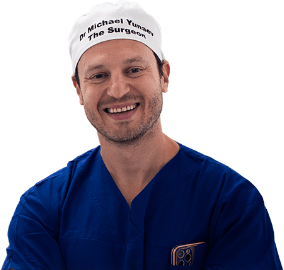
If you’re weighing up a procedure and want to know exactly what it will cost you, the clearest next step is a consultation. Dr Yunaev will assess your needs and give you an itemised, personalised quote along with the financing options that suit your situation.
Call (02) 9819 7449 or book a consultation online.










 Ask a Question
 Call Us
 Book a Consult